
Siddhartha
October 21, 2026
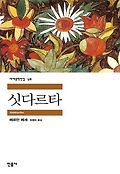
Siddhartha
Hermann Hesse
Minumsa
2002-01-20
9788937460586
Review
This was a book I kept telling myself I should read, only to put it off again and again. Yet lately, during a period when my thoughts have grown increasingly restless, I felt that now was truly the time to read it, so I finally opened its pages.
Having been deeply moved by Demian in the past, my expectations were naturally high simply knowing it was another work by the same author, Hermann Hesse.
Having been deeply moved by Demian in the past, my expectations were naturally high simply knowing it was another work by the same author, Hermann Hesse.
However, because I had almost no background knowledge of Buddhist philosophy or its associated terminology, I had to pause and search each unfamiliar term as I read.
At first, it seemed to flow smoothly enough, but wishing to genuinely understand and connect with the meaning behind every single line uttered by the protagonist, Siddhartha, I intentionally slowed my reading pace and began to read more closely.
At first, it seemed to flow smoothly enough, but wishing to genuinely understand and connect with the meaning behind every single line uttered by the protagonist, Siddhartha, I intentionally slowed my reading pace and began to read more closely.
An interesting point was that the figure of "Gautama Siddhartha"—whom we commonly know through history and religion as a single individual—is split in this novel into two distinct characters: Gotama and Siddhartha.
Because of this, the scenes where the two stand face to face and converse felt almost as though Siddhartha were confronting his own inner conflicts, posing his deepest agonies and questions to himself.
Because of this, the scenes where the two stand face to face and converse felt almost as though Siddhartha were confronting his own inner conflicts, posing his deepest agonies and questions to himself.
Perhaps it felt even more that way because lingering impressions of Demian remained with me.
Since Demian was also a work open to diverse interpretations—whether Demian was a real person or another self residing within the protagonist's mind—I naturally came to view this novel through a similar lens.
Since Demian was also a work open to diverse interpretations—whether Demian was a real person or another self residing within the protagonist's mind—I naturally came to view this novel through a similar lens.
One of the parts that resonated with me most profoundly was the fact that Siddhartha ultimately embraced every person who passed through his life as a teacher.
Kamala, who taught him worldly pleasures; Kamaswami, who showed him the desires of commerce; and even Vasudeva the ferryman, who carried people across the river while quietly listening to its voice—all of them were his masters.
Kamala, who taught him worldly pleasures; Kamaswami, who showed him the desires of commerce; and even Vasudeva the ferryman, who carried people across the river while quietly listening to its voice—all of them were his masters.
"Wisdom is not communicable. The wisdom which a wise man tries to communicate always sounds like foolishness to someone else."
The experiences and knowledge gained through living across long years and clashing directly with reality, along with all the emotions felt with one's entire body, come together to finally shape the "I" of the present. I resonated deeply with the message that this can never be fully conveyed through someone else's spoken words or language alone.
It might be possible to retrospectively piece together countless past experiences and choices to organize them into a plausible philosophy or theory.
However, treating that as if it were an absolute formula and proclaiming, "If you just follow this exactly, you can attain enlightenment just like me," is fundamentally impossible.
In the end, whether we were conscious of it or not, we have continually been shaped by the countless events we encountered and the people who brushed past us throughout our lives; it seems more accurate to view the present self as the sum of all those assembled pieces.
The sentiment that
Knowledge can be communicated, but wisdom cannot feels like a phrase I should engrave and continually revisit in my heart for the rest of my days.The scene in the latter half of the book where Siddhartha gazes into the river and listens intently to its voice also leaves a lingering resonance.
The river flows incessantly yet never disappears; the past, present, and future all blend together into one, flowing at this very moment as the presence of the river.
We often chase only the goals or conclusions of life, easily overlooking the journey right in front of us. Yet this book reminds us that within the vast current of life, not a single moment—not even our failures, wanderings, or the seasons spent immersed in worldly desires—is wasted.
Just as every river eventually flows into the sea and becomes one, this book offered quiet comfort, reminding me that the countless wanderings and agonies I have passed through were also precious parts that sculpted the person I am.
Another thought I found myself turning over was the paradox that the harder we strive to desperately search for something, the further we may drift from its true essence.
The protagonist lived as a perpetual seeker of truth, pursuing countless disciplines and teachings; yet the moment he fixated on something as a goal, his vision narrowed, and he often fell into the trap of failing to see the truth right beside him.
It prompted me to reflect on whether I, too, had carelessly overlooked and bypassed the precious moments of everyday life unfolding right before my eyes, lost in the pursuit of answers or achievements.
There was a peculiar, moving resonance in realizing that some things only reveal themselves when we stop struggling to hold onto them and simply surrender ourselves entirely to the flow.
It was astonishing to see the wandering, disappointment, and constant inner anxiety that every human being inevitably faces handled with such quiet composure and profound depth.
Without forcing any answers or attempting to lecture, simply allowing us to quietly witness the journey of one person seeking his own path made this an immensely meaningful read.
Without forcing any answers or attempting to lecture, simply allowing us to quietly witness the journey of one person seeking his own path made this an immensely meaningful read.
Whenever my thoughts grow tangled over the direction of life, or whenever my mind feels restless as it does now, this is a book I wish to take off the shelf periodically to listen once again to the sound of the river within me.