
Five Fragments of Reminiscence
May 16, 2026
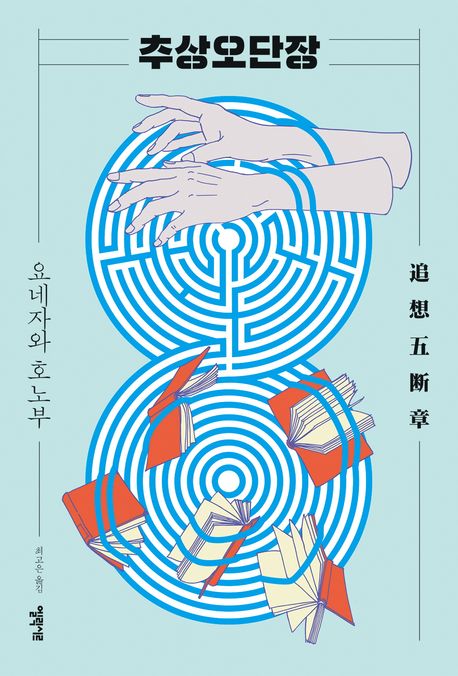
Five Fragments of Reminiscence
Yonezawa Honobu
Elixir
2023-07-28
9788954694407
Review
Yonezawa Honobu's Five Fragments of Reminiscence (追想五断章) draws readers into a labyrinth in a way completely unlike conventional mystery novels. The heart of this work is, as the title suggests, five fragments (断章) — five short stories that end without conclusions.
The protagonist Sugao, after losing his father, takes on the task of tracking down five short story manuscripts that his father had purchased from clients during his lifetime. Each of those manuscripts is an unfinished piece — a so-called incomplete short story left without an ending.
And yet, even as you encounter the endings of these fragments, questions remain. Was there a reason to leave them without a conclusion? The endings within each fragment are all different, yet the truths hidden within them are connected as one. You get the feeling there is something more beneath the surface. That mystery is what makes this work so captivating.
In a typical mystery, the full truth of a case is revealed clearly at the end. But this work completely overturns that formula. All the truth is hidden within the conclusionless fragments, and readers must piece together those fragments themselves to reconstruct the real story. The moment reading the fragments transforms from a simple reading experience into an active act of deduction — that is the most powerful appeal this novel possesses.
The premise of deducing the full truth of a case solely through the fragments was genuinely fresh. There is no detective, no dramatic scene where the culprit is named. Only the emotional texture hidden between the lines and the spaces within the sentences serve as clues. This unfamiliar yet intricate structure was what kept the book impossible to put down.
Yonezawa Honobu never directly describes a character's emotions. Instead, he conveys what characters carry through brief dialogue, a single moment of action, or the weight of silence. These feelings are never stated outright — they seep in little by little through the small windows that are the fragments.
The reason this work transcends a simple mystery is its meta structure, where another novel exists within the novel. The fragments the protagonist reads are fictional stories, but at the same time they serve as codes to real events. The reader ends up experiencing a double reading — enjoying the stories within the fragments while simultaneously tracking the truth hidden within them; two layers of narrative proceeding in tandem.
When the novel's true ending is finally revealed, readers find themselves recalling the fragments they have already read. And they feel anew the weight of the truth that was hiding within them.